
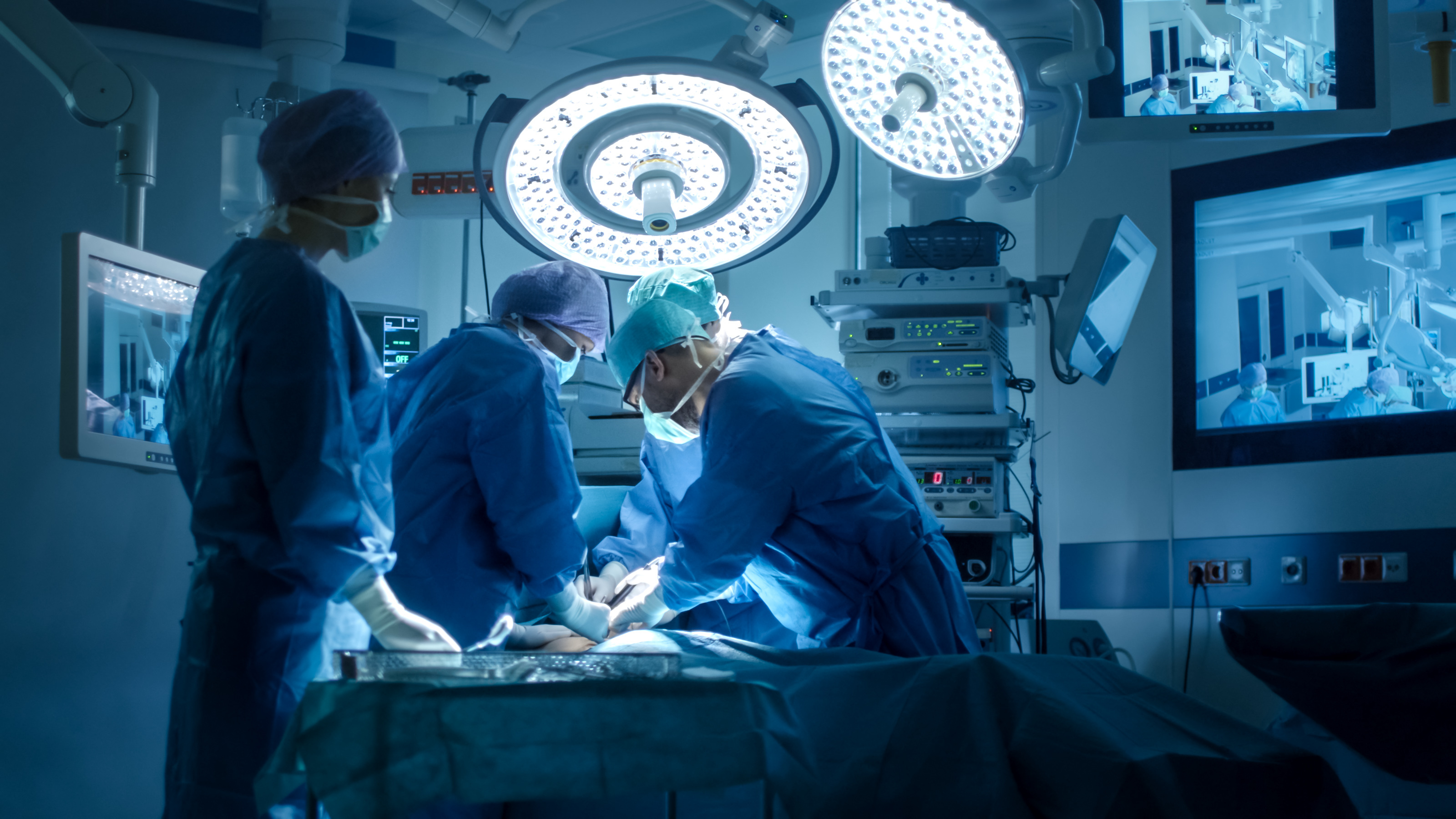
Built for the Complex Encounter
Routine visits are the easy half of coding. Complex encounters, multi-day admissions, and surgical cases are where accuracy is tested, and a claim is won or lost. A coder's look at what surgical and inpatient documentation asks of the note.
In coding, the hard work is not the routine visit. It is the complex encounter. A single inpatient stay can involve about 59 documents and 50,000 words, with more than 150,000 possible codes in play, and most errors at that volume don't repeat. In one sample of 7,500 coding errors, 57 percent were unique, one-off mistakes. That is the part of the job that separates real coding accuracy from its appearance.
Coders know that the claim is only ever as good as the note behind it. A complete, accurate note gives us what we need to code the encounter correctly the first time. A thin one forces us to send queries, risking lost details. In complex care, there is more that can be lost between the room and the claim, which is why the note matters most, especially where the encounter is the hardest.
Much of the documentation AI is built for the short, clean outpatient visit, where the note is brief and the coding is routine. That work is real, and it is typically the easier half of the problem. Multi-day admissions and surgical cases are where coding decides whether the claim holds up, and they are where I spend much of my attention.
Volume is not the whole challenge. The harder part is that complex encounters produce errors that do not repeat, as mentioned previously. A rules engine catches the mistakes it has seen before, and it struggles with the one-off, the unusual combination, the case that does not fit a template, which is most of what a busy inpatient service generates. Reading the documentation in context and putting a credentialed coder on the exceptions is what closes that gap.
For a health system, the stakes on a complex claim go past the dollars on that one claim. They are audit exposure and the defensibility of the record. A complex inpatient or surgical claim that cannot show how its codes were supported stays at risk long after it is paid. Having spent my career in health information, I care about a record that holds up when questioned, and that starts with accurate, traceable documentation from the beginning.
The operative note is the hard part
Ortho surgical is the clearest example. A surgical encounter carries laterality, global periods, and modifier stacking; the -22, -51, -59, -RT, and -LT detail that decides whether a claim is paid. Up to 12 percent of surgical claims are denied on first submission, mostly due to modifier and global-period errors. These are avoidable documentation and coding failures, and coders see them every week.
Ortho has its own version of nearly every hard case: global periods that span weeks and bilateral work that must be captured correctly on each side. Get the operative note right, and the coding has what it needs. Leave it thin, and cash flow is further delayed by necessary coder-generated queries and the effort to understand what happened from a record that no longer shows it.
This is the work InstaNote and InstaCode were built for. InstaNote captures the operative note the way surgeons work, through dictation as well as ambient capture, on a HITRUST-certified platform and makes it immediately available for the next step. InstaCode reads that operative documentation and codes it with built-in surgical logic, confirms laterality, and applies global periods and modifiers.
One pass, both sides of the claim
Surgical and inpatient encounters usually carry both a facility fee and a professional fee, and most coding tools handle those as two separate jobs. InstaCode runs them in a single pass, presenting the facility and professional records together in one workflow, with either side able to submit on its own. For a case that carries both, that is the difference between one clean workflow and two that can drift apart.
People stay in the loop where judgment belongs. Our credentialed coders, AAPC and AHIMA-certified, review the complex and flagged encounters, and exceptions stay with our team rather than landing back on a customer's staff. The Perform Platform traces the full path from documentation to final code to claim, so when a complex claim is questioned, the record shows how we reached the code. That traceability is what lets a coding team stand behind its work.
Authorization that matches the claim
Complexity does not stop at coding. Surgical and inpatient procedures carry the heaviest prior-authorization burden, and the delays are real, measured in extra days for spine, hip, and shoulder cases. A large share of that delay comes from authorizations that don't match the eventual claim. InstaAuth, the first agent on our AI RCM platform, carries the complete code set InstaCode produces into the authorization itself, including modifiers and add-on codes, so what gets authorized matches what gets billed. It reads the completed care plan and submits the request at note-signing, while the clinical detail is still fresh.
Depth and reliability together
None of this asks the clinician to work differently, and none of it asks a coding team to accept a black box. InstaNote runs across more than 50 EHRs and returns a near-final, structured note in about five minutes, whether the encounter was captured by dictation or ambient conversation, inpatient or outpatient, on a HITRUST Certified platform. Depth on the hard cases and reliability across settings hold together.
Simple encounters will keep getting easier to document and code for everyone. The complex ones test accuracy, and they reward depth over speed. That is the coding I have built my career around, and it is the work these tools were made to do well.
If this is the work your team wrestles with every week, our coding specialists are glad to walk through it with you. Start the conversation.
Tags
Stay Updated
Subscribe to our newsletter for the latest healthcare AI insights and company updates.