
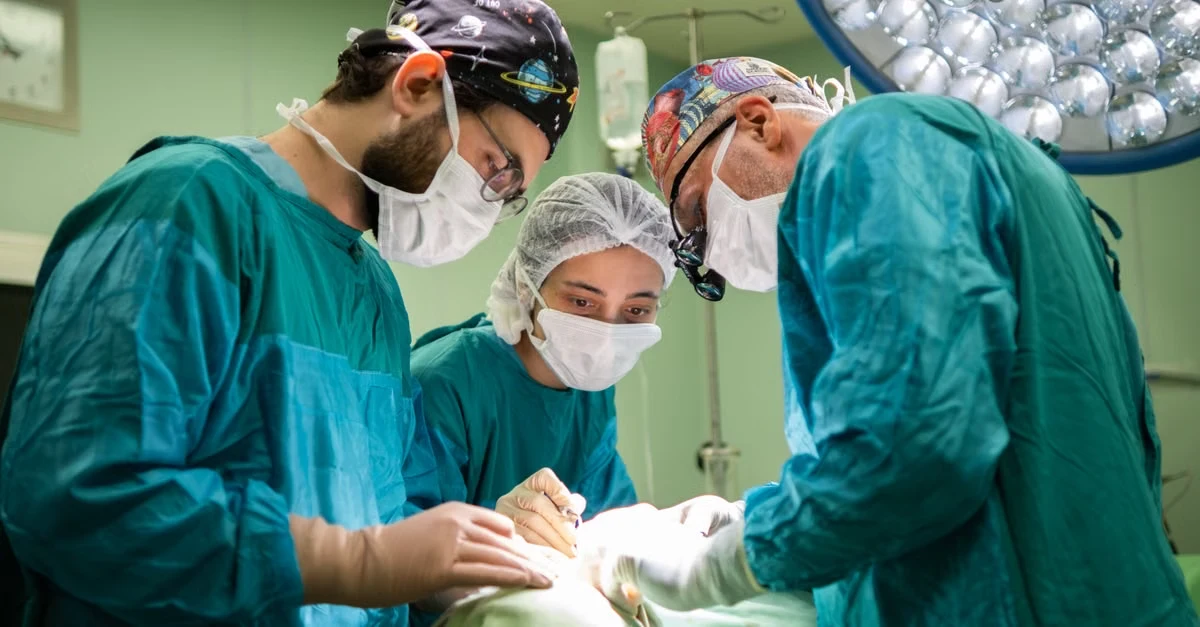
General Surgery Coding Without the Queue Bottleneck
General surgery generates both routine, repeatable cases and complex operative encounters, and both run through the same coder queue. This article covers what that costs health systems in coding lag and denials, what autonomous coding absorbs, where human coders remain essential, and how InstaCode supports surgical coding workflows.
Quite often, two charts land on your coding team's desk: a routine hernia repair and a complex bowel resection with pages of operative notes to work through. Same team, same coders, wildly different effort required.
The result is that too many charts compete for too few coders on your team, and the mismatch buries your coders under the volume. Even though your coders are highly experienced, the sheer volume of charts usually outweighs their capacity.
In this guide, we'll explore the source of the capacity problem in general surgery coding, what autonomous coding actually handles, and how to keep your best coders on the cases that need them.
What Is General Surgery Coding?
General surgery coding is the workflow your team uses to turn a surgical encounter into a claim that a payer will actually pay.
The process starts with the surgeon's operative note (documentation). From there, your team reviews the notes, assigns the correct codes, and finally validates them before a bill leaves the system.
Think of general surgery billing and coding as a relay rather than a single task. Every handoff between your surgeon, coders, and billers carries its own risk of delay or error.
A single missed detail in the workflow can turn a clean case into a denial. When you manage a busy general surgery service line, you handle hundreds of these relays every week.
Getting the workflow right means you get paid without the usual wait, while getting it wrong means revenue leaks out through cracks nobody notices until it’s too late.
Why General Surgery Coding Strains Revenue Cycle Capacity
General surgery produces one of the widest procedure mixes in any service line, ranging from quick outpatient hernia repairs to complex, multi-hour abdominal cases.
The massive procedure volume, combined with the chart backlogs and coder turnover your team may already be managing, turns ordinary general surgery coding challenges into real revenue risk for your organization.
Here are the 3 pressure points you're likely to encounter most often:
Coding Lag and Unbilled Revenue
Complex charts wait behind routine ones on some days, while routine charts wait behind complex ones on others. Either pattern leaves cash sitting on the table when it should be in your bank account.
Take a same-day gallbladder removal, for example. It might be cleared from your coding queue in minutes. A multi-organ resection with several assisting surgeons could drag on for days as your coders untangle the documentation.
When either type of chart piles up, the number of your Discharged Not Final Billed (DNFB) cases keeps growing. Every unresolved day forces your health system to pay for care it has already delivered without being reimbursed.
Denials That Start in Documentation
Most denials that your team fights trace back to documentation, which is the clinical note your physician or surgeon records for each patient encounter.
Your surgeons carry a heavy note-making load of their own, often documenting hundreds of encounters each month on top of a full surgical schedule. A missed detail here and there reflects the weight of what a single physician must capture between cases, and it is a multifaceted problem.
When your coding occurs days after the encounter, the clinical record has already undergone several handoffs. By this time, some details may have been missed or lost in the process.
In some cases, the note itself may be deficient, missing critical details that your coders need to assign the right codes.
When a payer is concerned about medical necessity on a routine cholecystectomy, it doesn’t mean that the surgeon did something wrong. More often, it means the record supporting that surgery was thin, late, or both by the time a coder saw it.
A documentation gap follows the chart through coding and into billing. The gap grows more expensive to fix at every step, and eventually leads to a denial.
As such, your revenue can disappear between documentation, coding, and billing, or within any of them. You must improve your medical coding accuracy upstream, in the documentation your surgeons hand off, long before it reaches the billing office.
Coders Working Below Their License
General surgery coding teams rarely have enough coders. Your most experienced coders end up handling routine, straightforward charts alongside the complex ones, simply because there's no one else to route the routine work to.
Every hour one of your coders spends re-keying a straightforward appendectomy robs them of the time for the complex, multi-procedure case that needs their trained eye.
The problem your team is facing here isn't the number of coders. Instead, the larger problem is coder targeting. Adding more coders won't fix it, nor will cutting coders.
The solution is to point your coders to the work that genuinely needs them, while your lower-judgment volume takes a different path entirely (discussed below).
Left unaddressed, the coder-to-chart mismatch widens the mid revenue cycle bottlenecks that affect most organizations. More claims are denied, while the ones that are cleared take longer to pay.
How Autonomous Coding Changes General Surgery Coding
Autonomous coding is a software-based coding system that assigns codes automatically without a person having to review every chart by hand. The automated workflow is reserved for encounters that are clean and complete enough for the software to code confidently. Manual coding, in contrast, sends every chart through a coder regardless of how routine it is.
In autonomous coding, a confidence engine scores each encounter based on your predetermined confidence thresholds and the cleanliness and completeness of your documentation, then handles or routes it to expert human coders.
A routine, well-documented hernia repair with a clear and complete operative note can meet your pre-defined threshold and is coded automatically. A complex surgery with multiple surgeons, unclear margins, or thin documentation fails to meet the threshold and is consequently escalated to your human coders for a closer look.
As DeliverHealth's autonomous coding engine, InstaCode applies confidence-based routing to your general surgery charts.
Your documentation is handled in InstaNote, the clinical documentation solution that converts your surgeon's dictation or ambient conversation into a structured note that your coding team can work from. That note feeds directly into InstaCode for coding.
Here's what the workflow means for your organization once InstaCode and InstaNote are working together across your general surgery service line:
Confidence Thresholds Determine the Right Coding Path: Every general surgery chart you send through is scored for documentation completeness before any human sees it. High-confidence, routine cases are automatically cleared, while lower-confidence or complex cases are escalated to one of your human coders.
A Built-In Audit Trail for Every Case: InstaCode logs the AI output, any changes your coder makes, and the reasoning behind each decision for every encounter it handles. The built-in audit system means your compliance team can review any case long after the encounter closes, without having to hunt through separate logs to reconstruct what happened.
Documentation Backed by HITRUST i1 Standards: InstaNote operates on the eSOne platform, the layer that enables real-time, structured documentation. eSOne is HITRUST i1 certified, the industry's highest bar for healthcare data security. The certification covers the documentation side of your coding-to-billing workflow and confirms that InstaNote's security and data-handling controls meet HITRUST's standards. Your compliance team doesn't need to vet the documentation layer separately before coders use the notes or during a security review.
Agentic RCM to Connect the Work: InstaCode and InstaNote already function as coordinated agents through our agentic RCM. The coordination turns documentation and coding into one connected step instead of a handoff between 2 separate tools, leading to faster payouts and more approved claims.
Schedule a demo with our team today to see how proper documentation and confidence-based routing would apply to your own volume.
Where Human Coders Stay Essential in Surgical Workflows
Your confidence thresholds only work because trained coders stand behind them, ready to work on the complex cases the routing engine declines. Every escalated case, whether it's a complex resection, an ambiguous operative note, or a low-confidence chart, ends up in front of someone who understands general surgery.
Here's what keeps that person central to your workflow:
They Work on Complex Cases: Low-confidence and ambiguous cases route to one of your coders before anything reaches a payer. Your coders review the exceptions that autonomous coding flags, which means they can bring critical human judgment to the multi-procedure or unusual documentation cases that a routing engine declines to guess on.
They Ask Surgeons When Notes Fall Short: When an operative note is unclear or leaves out critical details, your coder can ask the surgeon to clarify. A confidence engine only sees what's on the page, so getting the surgeon's actual answer takes a person.
They Help You Fine-Tune the Workflow: Every correction your coders make feeds back into the autonomous coding model to help improve how future general surgery charts are scored. Over time, the confidence engine gets even better at recognizing which encounters are safe to automate and which still need a human first look.
At DeliverHealth, we encourage organizations to have enough human coders. Our goal is to ensure your coders spend their day on cases that need them, while your routine volume clears on its own in the background through AI-powered coding.
Choosing a General Surgery Coding Operating Model
You can handle general surgery coding in-house, through outside coding support, or a mix of both.
Here are various general surgery coding operating models you can choose from:
In-House Coders, External Coders, or Both: Keeping every general surgery chart in-house gives your health system full control over coding, provided you already have the specialty depth to match your volume. Using an external general surgery medical coding company works better when you have an overflow in volume or need specialty expertise you don't have on staff. Most teams opt for a hybrid workflow, keeping core volume in-house while sending spikes to outside support.
A Software Path or a Managed Service: Some teams want a coding platform that their own staff operates day-to-day. Others prefer a general surgery billing company or a managed service that handles coding end-to-end, freeing their internal staff to focus on other priorities.
Your EHR or DeliverHealth's PerformPlatform: Your organization may keep coding activity within its EHR alongside everything else your staff does there. You can also code on PerformPlatform, our dedicated coding environment where InstaCode's confidence-based routing and audit trail operate. Through PerformPlatform, your coders gain visibility purpose-built for coding and audit, away from a general-purpose EHR screen.
The general surgery coding operating model your team picks should be judged on the basis of ramp time, cost structure, how much control your coders have, and visibility into every coded chart.

Frequently Asked Questions (FAQs)
Here are quick answers to the questions most revenue cycle and HIM leaders ask about general surgery coding:
How Is General Surgery Coding Different From Other Specialties?
General surgery coding spans one of the widest procedure mixes of any specialty, from routine hernia repairs and appendectomies to complex multi-organ resections.
Your coders often handle both routine and complex general surgery cases side by side, which makes staffing and routing harder than in narrower specialties.
How Many Coders Does a General Surgery Service Line Need?
The number of coders your general surgery service line needs depends on your chart volume, procedure mix, and how much routine work autonomous coding absorbs.
Once autonomous coding clears your routine charts, a general surgery coder can spend more time on complex cases, so your team handles more volume without adding headcount.
What Documentation Does Accurate General Surgery Coding Require?
Accurate coding requires an operative note that’s clear enough to support the procedure performed, without your coder necessarily having to ask the surgeon to clarify things.
Complete documentation covers technique, findings, and any additional procedures performed in a single session, all based on the current year's general surgery coding guidelines.
How Do You Measure General Surgery Coding Performance?
Measuring your general surgery coding performance means tracking 3 key aspects:
The number of days that have passed from the patient encounter to the final code and billing.
Denial rates by procedure type.
The share of charts that autonomous coding clears without your coder touching them.
You’ll need to watch the 3 numbers together and compare them to your team's capacity. The typical result is that autonomous coding helps you clear far more cases by handling more low-complexity charts than when your coders work on them by hand.
How Long Does It Take to Implement Autonomous Coding for General Surgery?
Implementing autonomous coding for your general surgery service line takes a few weeks.
But first, you must get your documentation quality and EHR integration in order. The process can add a few more weeks, depending on procedure complexity, case volume, and the revenue cycle team's preparedness.
With standardized operative notes and well-defined confidence thresholds, your team can start clearing volume more quickly. You can expect the implementation timeline to be longer if your surgeons use different chart formats that need to be harmonized first.
Conclusion
General surgery coding strains your team's capacity long before it ever strains anyone's coding knowledge because one queue has to absorb everything, from a quick outpatient repair to a multi-hour, multi-organ case.
If routine charts keep entering your coders' queue, you bury your most experienced coders in low-judgment work, yet they still have to handle complex cases.
That's where DeliverHealth fits in. We're a healthcare technology company built around InstaNote and InstaCode.
Our AI-powered documentation and autonomous coding solutions let your routine coding charts clear on their own, backed by confidence-based routing and a built-in audit system across both tools, while your coders make the judgment calls.
Your revenue cycle team gains real coding and billing capacity without losing coding accuracy or claim quality, which is a tradeoff you shouldn't have to make.
Book a demo with us today to see how chart segmentation would work for your general surgery service line.
Stay Updated
Subscribe to our newsletter for the latest healthcare AI insights and company updates.