
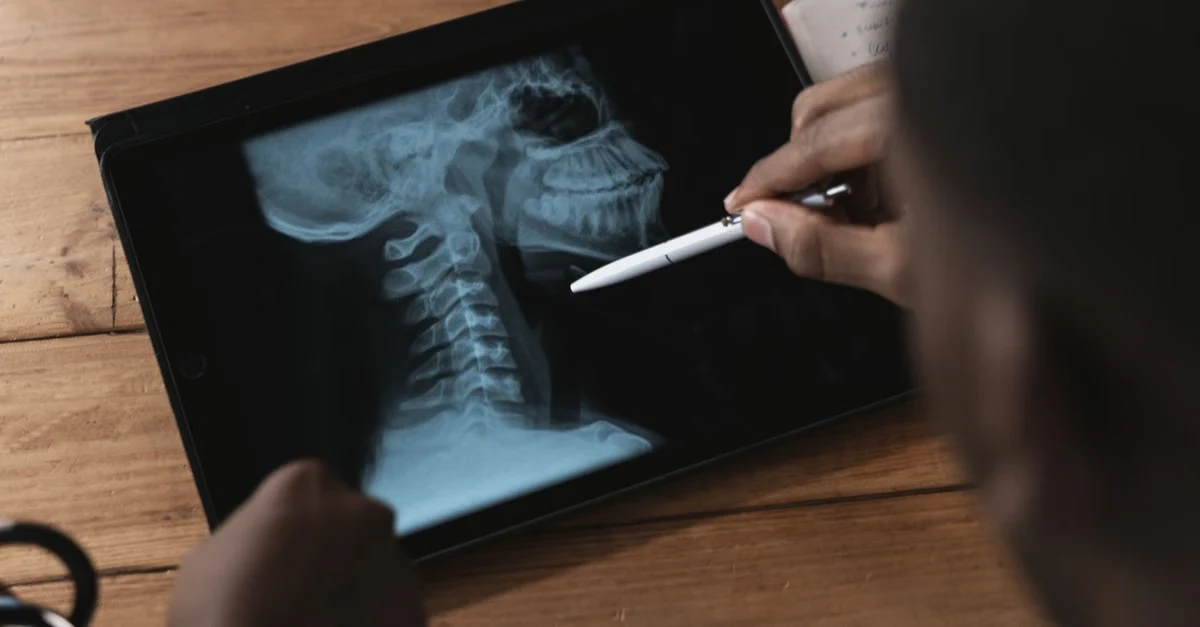
The Spine Surgery Coding Guide for CPT and ICD-10
Spine surgery coding requires precise diagnosis coding and thorough clinical documentation. Learn key ICD-10 guidelines, avoid common coding errors, and improve coding accuracy with AI.
Like other complex specialties, spine surgery coding requires your team to deal with overlapping Current Procedural Terminology (CPT) categories, strict bundling rules, and modifier requirements that vary from one payer to another.
Getting every element right on the first pass takes a structured workflow and reliable reference material.
As a healthcare executive or revenue cycle leader who oversees spinal coding and billing workflows, you know how frustrating it is when a denied claim traces back to poor clinical documentation or something your team missed in the process.
You need a reliable spine surgery coding guide to help your team avoid costly errors and speed up your reimbursement cycle. Let's walk through the essentials.
What Does Spine Surgery Coding Involve?
Your team navigates several types of procedures for every spine case. Each procedure has its own primary codes, add-ons, and modifier rules that your coders must verify against your surgeon's operative note.
Let’s go over the major categories you need to consider:
Fusion: Spine surgery CPT codes for fusion cover anterior, posterior, and lateral approaches by segment. Spinal fusion coding guidelines require your surgeon's note to specify the approach, the number of levels, and any hardware placed. Your payer policies may also differ depending on the approach.
Decompression: Procedures such as partial laminectomy and partial facetectomy have separate primary and add-on codes based on the number of segments involved. Your team must distinguish between the two based on the number of levels the surgeon addressed in the operative note.
Instrumentation: Your coders must confirm the number of segments with instrumentation and match them to the correct primary code from the same session. Missing a segment here means you leave revenue on the table.
Unlisted Procedures: When no standard CPT descriptor fits a case, your coder uses the unlisted spine procedure code. Your submitted documents need to explain why the unlisted code was the right choice.
These categories often appear together in one case. Your coding team's accuracy depends on complete and accurate operative notes from the start.
When your surgeons use AI-driven clinical documentation, the notes they produce capture the detail your coders need, which reduces coding errors and rework downstream.

(ICD-10) and Diagnosis Code Essentials for Spine Surgery
Every diagnosis code you use in a reimbursement claim tells your payer why the surgery was necessary. The International Classification of Diseases, 10th Revision (ICD-10) codes you choose must match the documented problem, the affected spinal level, and the laterality for your claim to clear.
You need to focus on the following areas as a revenue cycle leader who wants cleaner claims from your coding team:
Specificity by Spinal Region: ICD-10 codes for the cervical, thoracic, lumbar, and sacral regions occupy different code ranges. Your coder must confirm the exact level from the operative note before selecting a diagnosis code. A generic "upper spine disorder" won't be enough to cover your payer's requirements.
Degenerative vs. Traumatic Causes: A herniated disc and a vertebral fracture take completely different ICD-10 paths. The operative note should state whether the problem is degenerative, traumatic, or tied to a structural deformity such as scoliosis.
Diagnosis and Procedure Code Match: The ICD-10 and CPT codes you assign must tell a clear clinical story together. A payer reviewing your claim will look for a logical link between the diagnosis and the procedure you've billed.
If the ICD-10 codes you use lack specificity, payers flag the claim. Your billing team then needs to rework the case or write appeals.
You’ll want to get the diagnosis right the first time to save your team from the most common mid-revenue cycle pains that eat up hours of staff time.
Strong Spine Surgery Coding Guide
Your organization needs the right reference material to give your coders a repeatable framework for every spine case, especially when your surgery coding volumes are high and you have tight turnaround windows.
A strong spine coding guide should walk your team through key steps before any claim leaves your system.
Here’s a repeatable guide you can emulate:
Verify Approach and Access: Your coder should confirm the surgical approach (anterior, posterior, lateral, or combined) before selecting any CPT code. The approach determines the entire code range, and a mismatch between the note and the code you select triggers a review.
Confirm Segment Count: Your coder should count the treated vertebral segments from the operative note. Add-on codes for fusion, decompression, and orthopedic surgery coding in general depend on the exact number of segments your surgeon addressed.
Check and Confirm Add-On Rules: Procedures such as a discectomy have add-on codes for additional levels. Your coder should assign the primary code first, then add each additional level separately by segment.
Review Modifier Rules: You'll have to show specific modifiers for bilateral procedures, staged procedures, and multiple surgeries in one case. If the coders miss a modifier or indicate the wrong one, it can trigger a denial, which causes a delay in your payment.
Cross-Reference Payer Policies: Neurosurgery coding rules can differ by payer. Your team should maintain a payer-specific reference for recurring rules on bundled codes and authorization policies.
A consistent checklist like this helps every coder on your team produce clean claims, fewer denials, and faster payment for your organization.

Mistakes Coders Make Without a Spine Surgery Coding Guide
Most errors in spine surgery billing often trace back to unclear operative notes or missing reference material on your coder's desk. As a revenue cycle leader, you’ll see the downstream effects in denied claims, delayed payment, and massive rework.
Your team should be on the lookout for the following recurring mistakes:
Unbundled Codes Billed Separately: Your coder bills decompression and fusion as unrelated procedures when the surgeon performed them together. Your internal code-specific reference should list which code groups your payer expects you to bill as a unit to prevent unbundled claims from reaching them.
Omitted Add-On Codes for Extra Levels: A primary code for a multilevel procedure without the add-on for the second or subsequent segments means you’ll lose revenue on each missing level. Your coder should cross-reference the operative note against each billed segment to confirm nothing was left out before the claim leaves your system.
Wrong or Absent Modifier: Bilateral spine procedures and staged procedures require specific modifiers. A missing or incorrect modifier results in a denied claim. You can include a modifier checklist in your internal coding workflow to prevent these errors.
Vague Operative Notes: Your coder can only code what the surgeon wrote. When the operative note reads "multilevel decompression" without specifying levels or approach, your coder must ask the surgeon to clarify, which delays your entire revenue cycle. The solution to preventing delay is to have better operative notes right from the moment of the physician-patient encounter.
AI Solutions for Spine Surgery Coding Accuracy
The coding mistakes above share a common thread: they slow down your revenue cycle and erode your margins. AI-powered coding solutions help your organization address these problems at scale.
For routine, lower-complexity procedures, autonomous coding engines read the operative note, identify procedure components, and assign the right codes without manual effort from your team.
Your complex multi-component spine cases with unusual anatomy or hybrid approaches still need expert human coders who understand the nuances.
The key is to give AI the routine work while your experienced staff handles what requires clinical judgment. For your team, your strategy for reducing physician burnout often starts with the right workload split between AI and humans.
At DeliverHealth, our agentic Revenue Cycle Management (RCM) technology puts AI agents to work across your revenue cycle while your physicians and staff retain full control over clinical decisions and code approvals.
Over 60,000 providers across 800+ healthcare systems already trust our enterprise-level AI-powered solutions.
The following capabilities apply directly to your spine coding workflow:
Autonomous Code Assignment for Routine Cases: InstaCode reads your clinical notes, assigns codes for lower-complexity procedures, and routes complex cases to expert human coders through confidence-based thresholds. Our built-in auditing layer reviews every code before your claim goes out.
Connected Documentation Pipeline: When you add InstaNote, your surgeon's operative note feeds into InstaCode automatically, whether captured through ambient listening or direct dictation. The note reaches your coders while the case is still fresh, which leads to a faster coding-to-billing workflow.
Agentic Revenue Cycle Workflows: We apply agentic AI to tasks such as coding, audit, and case routing that used to require manual work at every step. Your AI agents perform a specific job while your team retains full oversight over the process.
Enterprise-Grade Security for Your Clinical Data: The eSOne™ platform, which powers InstaNote, is HITRUST i1 certified. Your compliance team can always be confident that every note meets the highest healthcare data security standards, covering your clinical documentation across care settings in 110+ languages. InstaCode focuses on outpatient coding, where your team handles the highest claim volumes.
You can think of InstaCode as the always-current coding reference or guide your team needs. It automates various steps in your routine outpatient spine cases, including checking add-on rules, verifying payer policies, and more.
Your team can audit every coded encounter through InstaCode's built-in audit system, which tracks AI output, your human coders' edits, and the reasoning behind each change.
Unlike a static PDF or an internal checklist that goes out of date, InstaCode stays current with your payer rules and periodic code updates while keeping your experienced coders in the loop for complex cases that require clinical judgment.
Book a demo to see how we connect your documentation and coding into a single end-to-end workflow.

Frequently Asked Questions (FAQs)
Let’s close with clear answers to common spine surgery coding questions:
What is the Difference Between CPT 63047 and CPT 63048?
CPT 63047 is the primary code your team assigns for a single-segment lumbar laminectomy. CPT 63048 is the add-on code for each additional segment the surgeon treats in the same session.
You always bill 63047 once per case, then add 63048 for every extra segment. Your payer's rules may cap the number of add-on levels per claim.
Can Multiple CPT Codes Be Billed Together for a Single Spine Surgery?
Yes, multiple CPT codes can absolutely appear on a single spine surgery claim. Fusion, decompression, and instrumentation codes often apply to the same case when the surgeon performs each component in one session.
Your coder must confirm your payer's pairing rules and specific policies to avoid bundled-code denials on the claim.
What Modifiers are Required for Bilateral Spine Procedures?
Bilateral spine procedures require your coder to append the correct modifier. The most common bilateral modifier applies to paired structures, while a separate procedure modifier may apply to distinguish distinct procedures in the same session.
For example, if your surgeon operates on both sides of the spine in one session, your coder needs to verify whether the CPT code already accounts for bilateral work or whether a separate bilateral modifier is required. For a bilateral lumbar laminotomy, the coder can append Modifier 50 to the primary code.
Your payer's rules determine which modifier fits each scenario, and your team should verify before you submit.
Does Documentation Quality Affect Spine Surgery Coding?
Yes. Your surgeon's documentation quality directly affects every code your team assigns. A clear operative note with specific levels, approaches, and devices gives your coder exactly what they need to code accurately.
Vague notes force the coder to ask the surgeon to clarify. They also slow down your billing cycle and increase your overall denial rate.
What Causes the Most Claim Denials in Spine Surgery Billing?
The most frequent denial triggers in spine surgery are wrong modifiers and incorrect code matches.
Vague operative notes are often the root cause behind these errors, since your coder must interpret unclear documentation, which leads to incorrect codes or modifiers on the claim. Each of these errors can result in a rejected claim and lost revenue for your organization.
Conclusion
Your spine surgery coding guide needs to be up to date and supported by clear operative notes. When your coders have a strong reference point because your surgeons produce complete notes, your denial rate drops, and your revenue cycle runs more smoothly.
AI-powered solutions are already helping healthcare organizations like yours streamline the most repetitive parts of the process.
At DeliverHealth, we offer autonomous coding for routine cases through InstaCode, confidence-based routing for complex encounters, and HITRUST i1-certified documentation security through the eSOne™ platform.
Our clinical documentation solution, InstaNote, ensures your surgeons' operative notes are complete and structured from the moment of the encounter, giving your coders all the details they need to code accurately.
Schedule a demo to see how DeliverHealth improves your spine surgery coding accuracy.
Stay Updated
Subscribe to our newsletter for the latest healthcare AI insights and company updates.