AI Scribe for Dermatology: Notes That Hold Up for Coding
Dermatology exams are visual, fast, and procedure-heavy, which makes them a hard test for ambient documentation. See what the note must capture for coding and how to evaluate a tool against real clinic days.
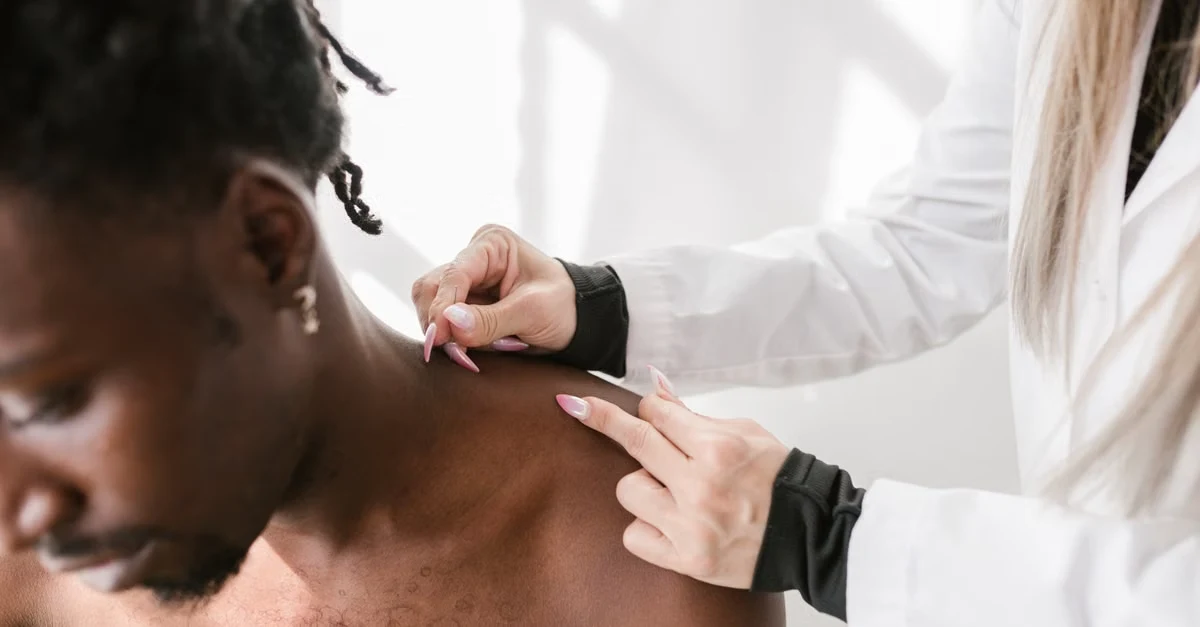
A dermatologist examines a dark spot on a patient's shoulder through a dermatoscope for twenty seconds without saying a word. That quiet moment is often the most important part of the visit, and an ambient microphone hears nothing.
So an AI scribe for dermatology has to catch what you see as well as what you say. Get a lesion's site, size, or count wrong, and the biopsy or excision code goes wrong with it.
In this article, we cover where dermatology notes break down, what coding needs from them, and how to evaluate and roll out a tool with your providers.
TL;DR: AI Scribe for Dermatology at a Glance
Keep these points in mind as you compare tools:
Silent exams: Dermatology exams are largely visual, so findings reach the note when your clinicians narrate or dictate them.
Coding details: Biopsy technique, excised diameter, lesion counts, and anatomic site all decide the code.
Same-day visits: A visit and a procedure on the same day need separate documentation to support modifier 25.
Evaluation and rollout: Test tools on full-body skin exams and procedure days, then pilot with a provider champion.
Why Dermatology Notes Are Hard for Ambient AI
Ambient documentation drafts the note from what it hears.
Dermatology tests that design in four ways:
The Exam Happens in Silence
Much of a skin exam is visual reasoning about morphology, color, border, and distribution. If the clinician never says those findings aloud, an ambient tool has nothing to draft them from.
A well-designed tool leaves that section empty and flags it for the clinician.
Garrett Dunne, who leads our documentation implementations, describes the choice this way:
"If you don't state it, here's the section that's going to be blank, and understanding why it's blank. We're doing that on purpose to protect you and to protect the patient."
Practices close the gap by pairing ambient capture with medical dictation software. That way, a clinician can dictate the exam findings once the patient leaves the room.
Each Lesion Needs Its Own Site and Size
A full-body skin exam can surface many findings in one visit, each with its own anatomic site, laterality, size, and morphology. A note that says "several lesions on the back" cannot support a destruction count or a biopsy site.
Lesion-level structure keeps findings from blending together. Each lesion gets its own block, and the procedure performed on it sits right beside it.
Procedures Often Happen at the Same Visit
Dermatology routinely pairs an office visit with biopsies, destructions, or excisions. The note has to show which work belongs to the procedure and which belongs to a separate evaluation, a split we cover in the next section.
Full-Body Exams Involve Sensitive Areas
Patients undress for a skin check, and some exams include areas they consider private. In a JAMA Network Open study of 103 patients in outpatient clinics, patients said they were more likely to hold back on sexual health, mental health, and illicit activity when clinicians used ambient documentation.
Protecting patient candor during recorded visits makes a clear consent conversation and an easy way to pause recording part of any dermatology rollout.
What a Dermatology Note Must Capture for Accurate Coding
Dermatology procedure codes depend on details the note alone may not provide. The AAFP's skin procedure coding guidance warns that incomplete or unclear documentation can lead practices to submit lower-valued codes, which cuts both revenue and the physician's work relative value units (wRVUs).
The table below maps common dermatology services to what the note has to state:
Service | What the note must state | Why the code depends on it |
|---|---|---|
Skin biopsy | Technique (tangential, punch, or incisional), number of lesions, and site | Technique defines biopsy codes 11102 to 11107, with one primary code plus add-on codes when the clinician samples several lesions |
Excision | Lesion type, site, and the excised diameter including margins | Excision codes follow the excised diameter, meaning the lesion's largest diameter plus twice the narrowest margin |
Destruction of actinic keratoses | The exact number of lesions treated | Codes step up by lesion count, with a single code once treatment reaches 15 or more lesions |
Shave removal | Lesion site and size | Location and size determine the shave removal code |
Office visit with a procedure | A separate assessment and plan for problems beyond the procedure | Modifier 25 requires a significant, separately identifiable visit, and the record must document it |
Excisions add a timing wrinkle. The code depends on whether the lesion is benign or malignant, so the same AAFP guidance advises waiting for the pathology report before you submit the claim.
A missing count or site turns into a provider query or a lost charge. For that reason, dermatology deserves a close look in any healthcare charge capture review.
Same-day visits raise the stakes further, because the structure of one note decides whether a single encounter supports one service or two:
How One Same-Day Visit Splits Into Two Services
An established patient comes in worried about a growing spot on the nose. The clinician performs a tangential biopsy of a suspected basal cell carcinoma, reassures the patient that the growths on the back are seborrheic keratoses, and prescribes topical treatment for actinic keratoses across the scalp.
In the AMA's guidance on reporting modifier 25, this exact visit supports a biopsy code plus a separate office visit code with modifier 25. The nose lesion evaluation stays within the biopsy, and the back and scalp problems support a separate visit.
An AI-drafted note that blends all three problems into one paragraph leaves your coder unable to defend that split. A note with a distinct assessment and plan for each problem makes the split visible.
Auditors check for exactly that:
Federal auditors look hard at same-day visits. In an OIG audit of modifier 25 claims billed on the same day as eye injections, documentation for 22 of the 24 sampled visits did not support the modifier.
How We Build Notes That Support Coding
Capturing these details is easier when the documentation tool is built for them from the start.
At DeliverHealth, we build AI-powered clinical documentation and coding solutions for health systems and physician groups, and InstaNote is where that work begins. InstaNote drafts a structured note from ambient conversation or dictation, and InstaCode can carry that note through to final, defensible codes.
Three InstaNote capabilities matter most for dermatology coding:
Coding suggestions at the point of care: InstaNote surfaces coding suggestions inside the documentation workflow, and each provider reviews and approves them before sign-off.
Nothing added that wasn't said: Our speech recognition is designed not to add anything that wasn't said, and the model does not infer a diagnosis, so unstated sections stay blank for the clinician to complete.
Built for your EHR: InstaNote works across more than 50 EHRs, including Epic, Cerner, MEDITECH, athenahealth, eClinicalWorks, and NextGen, and writes to discrete fields where the interface allows.
Book an InstaNote demo to see how a dermatology encounter becomes a structured, code-ready note before your provider signs.
How to Evaluate an AI Scribe for Dermatology
A short demo visit tells you little about a dermatology clinic day.
Use these six checks to test a tool against your providers' real encounters:
1. Test It on a Full-Body Skin Exam
Ask to see a note built from a busy skin check with several lesions, a biopsy, and a destruction. Check that every lesion keeps its own site, size, and morphology, and that the destruction count matches what the clinician treated.
Vendor demos usually rely on sample content. Plan to confirm performance on your own encounters during a pilot.
2. Check What Happens to Unspoken Findings
Ask what the tool does when the clinician sees a finding but never says it. A tool that leaves the field blank and flags it protects your record.
A tool that fills the gap with plausible text creates a liability your clinician has to catch. Confirm, too, that your clinicians can switch to dictation in the same encounter, including after the patient leaves the room.
3. Confirm Templates Match How Your Providers Chart
Dermatologists differ on how they structure lesion descriptions, procedure notes, and plans.
Look for templates that follow your organization's standards and each provider's preferences, ideally ones a provider can insert by voice during the visit.
4. Review How Visit and Procedure Documentation Stay Separate
Run the nose, back, and scalp visit from the previous section through each tool.
The draft should give each problem its own assessment and plan, so your coders can support modifier 25 without rewriting the note.
5. Ask Where Coding Support Begins and Who Reviews It
Some tools surface code suggestions inside the note, and others hand the note to a separate coding team or engine. Either way, ask who confirms the codes, how the system routes low-confidence encounters, and whether it logs every AI suggestion and human change.
The answers show how much the tool will contribute to improving medical coding accuracy in your dermatology service line.
6. Verify Security, Consent Workflow, and EHR Fit
Security and workflow gaps tend to surface after go-live.
Before you sign, get written answers to these questions:
Data protection: Will the vendor sign a business associate agreement under HIPAA, and which certifications cover which parts of its system?
Audio retention: Where does the vendor store audio, for how long, and can your organization set the retention period?
Consent support: Can clinicians pause or stop recording during sensitive parts of an exam?
EHR fit: Does the tool write to discrete fields in the EHR your dermatology team uses, or does it paste in a block of text?
How to Roll Out Ambient Documentation in a Dermatology Practice
Rollouts tend to succeed or stall on the organizational side of ambient AI adoption.
Four habits make the first weeks smoother:
Start with a provider champion: Pick one respected dermatologist or physician assistant who will use the tool every clinic day and share honest feedback. Their experience on real clinic days gives the rest of the team a credible reason to try it.
Script the consent conversation: Consent practices vary by organization and by state, so build your script with your compliance team. Fold the request into rooming, and tell patients how to pause recording before the exam begins.
Teach providers to narrate the exam: Saying findings aloud, such as a 6-millimeter irregular brown macule on the left upper back, gives the tool something accurate to draft. Narration also keeps the clinician's attention on the patient during the exam.
Audit the first weeks of notes: Compare a weekly sample of signed notes with the procedure log, and look for blank exam sections, lesion counts that don't match treatment, and visits where the procedure and the evaluation run together. Share what you find with providers early, while habits are still forming.
Frequently Asked Questions
Dermatology leaders often raise these questions when they compare tools:
Can Ambient AI Document Skin Findings It Cannot See?
No tool can draft what nobody said, so visual findings reach the note when the clinician narrates them during the exam or dictates them afterward.
A well-built tool leaves those fields blank and flags them, and the clinician completes them before signing.
How Should a Dermatology Practice Handle Consent for Recorded Exams?
Consent practices vary by organization and by state, so follow your compliance team's policy and make the conversation part of check-in or rooming.
Give patients a simple way to pause recording during sensitive portions of a full-body skin exam.
Will an AI Tool Assign Dermatology CPT Codes on Its Own?
Code suggestions can speed up coding, but the clinician and credentialed coders should confirm them before the claim goes out.
Every suggestion depends on the note stating technique, size, site, and count.
How Long Does a Rollout in a Dermatology Clinic Take?
Timelines depend on your EHR, your number of providers, and how much template work your team needs.
For InstaNote, our documentation solution with built-in coding suggestions, typical deployment runs two to three weeks.
Does Teledermatology Change What the Note Needs?
The coding details stay the same, and the note should also record how the visit took place and which images the clinician reviewed.
Telehealth rules differ across Medicare, Medicaid, and commercial payers, so check each payer's policy before billing.
Put Your Dermatology Documentation to the Test
A skin exam produces precise findings that clinicians rarely say aloud. Choose a tool that flags what it didn't hear and keeps every lesion distinct.
That standard shapes everything we build at DeliverHealth. We provide AI-powered documentation and coding solutions for health systems and physician groups, with InstaNote at the start of the revenue cycle and InstaCode and our agentic RCM work carrying that documentation downstream.
InstaNote, our AI clinical documentation solution for inpatient and outpatient care, lets your clinicians switch between ambient capture and dictation within a single encounter and includes coding suggestions that each provider approves before sign-off. Templates follow your organization's and each provider's requests, and InstaNote runs on our eSOne platform, which is HITRUST i1 certified.
Book an InstaNote demo to walk through sample notes aligned to dermatology, then test InstaNote on your own clinic days in a pilot.
Stay Updated
Subscribe to our newsletter for the latest healthcare AI insights and company updates.