

Medical Dictation Software: How It Works and How to Choose
Medical dictation software lets clinicians speak a note instead of typing it, but the category now spans dictation, ambient AI, and legacy transcription. This guide separates the three, shows how the technology works, and lays out what to weigh before you choose a tool.
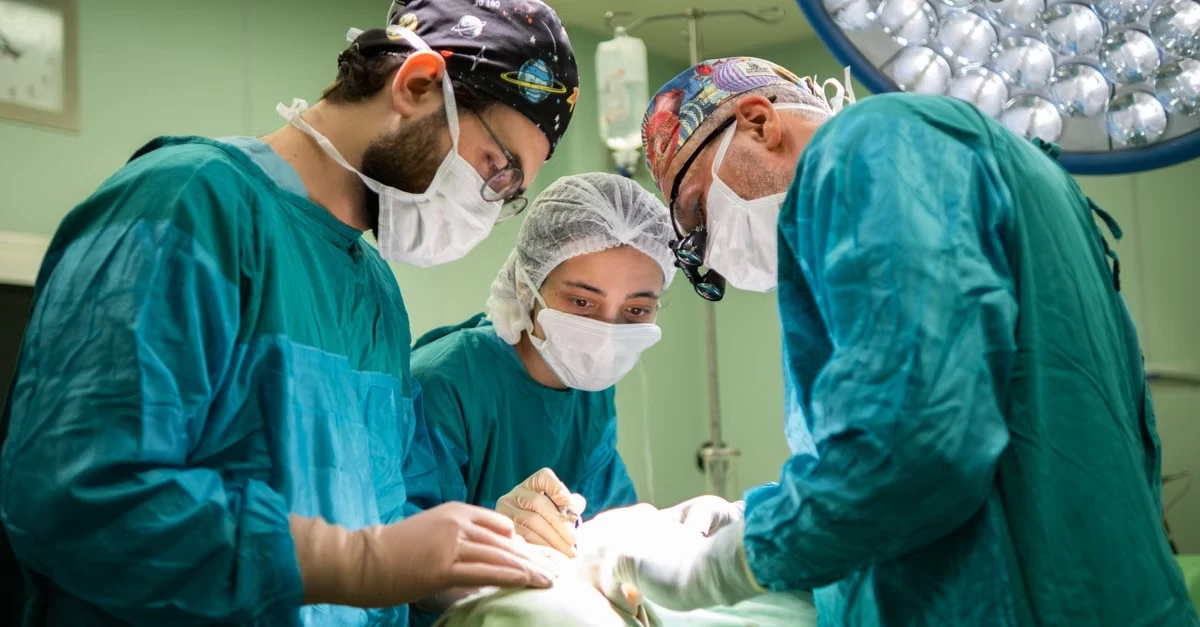
A surgeon finishes a case, steps out of the operating room, and dictates the operative note from memory while the details are fresh. No patient is in the room to record. The words still have to become clean clinical text that a coder and a payer will accept.
Medical dictation software makes that possible, turning a clinician's speech into a structured clinical note.
In this article, we cover how it works, how it differs from ambient AI and transcription services, and what to weigh before choosing one.
TL;DR: Medical Dictation Software at a Glance
The key points on medical dictation software:
Medical dictation software converts a clinician's speech into structured clinical text using speech recognition trained on medical vocabulary, then delivers it to the note or the electronic health record (EHR).
Dictation is voice-first, meaning the clinician speaks the note. That differs from ambient AI, which records the visit, and from legacy transcription services, which route audio to a typist.
Dictation fits encounters with no patient conversation, such as operative and procedural notes, where an ambient tool has nothing to record.
Weigh accuracy in your own specialty's language, EHR integration, security, and the review step that keeps a human accountable for the final note.
Run a pilot on your specialty mix before you commit.
What Medical Dictation Software Does
At its core, medical dictation software listens to a clinician speak and turns that speech into text. The difference from a general voice-to-text app is the vocabulary and where the text ends up. A clinical engine recognizes drug names, anatomy, procedure terms, and the shape of a SOAP note, and it can send the result into a specific field in the EHR rather than a blank document.
Documentation is a large share of a clinician's day. In a study of physician time, doctors spent nearly two hours on EHR and desk work for every hour of direct patient care. Dictation gives clinicians a faster way through that load without forcing them to move to a keyboard.
Some clinicians talk it out because they think faster than they type. Others use it because a spoken note captures nuance a template field would flatten.
Front-End and Back-End Dictation
Front-end dictation converts speech to text in real time. The clinician sees the words appear as they speak, edits on the spot, and signs the note without a handoff.
Back-end dictation defers that step. The clinician records, the audio is processed, and a draft returns for review shortly after. Both have a place, and the right fit depends on how much a clinician wants to review at the point of care versus at the end of a session.

How Medical Dictation Software Works
Under the surface, most clinical dictation tools move through four steps. Knowing them helps you ask sharper questions during an evaluation.
Voice Capture
The clinician speaks into a microphone, a phone, a dedicated dictation device, or a desktop headset. A close, good-quality microphone gives the recognition engine a strong signal to work with.
The stronger clinical engines are built for real-world conditions, including the background sound of a busy clinical setting.
Speech Recognition
A speech recognition engine converts the audio into text. A clinical engine is trained on medical terminology, so it handles anatomical descriptors, medication names, and specialty language that a consumer engine would mangle.
The stronger engines adapt to an individual clinician's voice and accent over time.
Note Structuring
Raw text is not a note. The software organizes the spoken words into the sections a clinical record needs, applies the clinician's templates, and formats the result to read like documentation rather than a transcript.
Voice commands can insert a template or move between fields.
Delivery to the EHR
The finished text lands where the clinician needs it. Better integrations write to discrete EHR fields rather than dropping a block of text, so the record stays structured and searchable.
Weaker integrations leave more cleanup for the clinician.
How Dictation Differs From Ambient AI and Transcription
The market blurs three different things under one banner, which makes shopping confusing. Separating them is the first step to choosing the right option.
Dictation is voice-first. The clinician speaks the note directly, in the words they want in the record. Ambient AI documentation works differently: it listens to the patient-clinician conversation and drafts a note from what was said.
Legacy transcription services route recorded audio to a human typist or an outsourced service that returns finished text.
Approach | How it captures | Where it fits |
|---|---|---|
Dictation | The clinician speaks the note | Encounters where the clinician wants to control the wording, including notes with no patient conversation |
Ambient AI | Records the patient-clinician conversation | Conversational visits where the dialogue carries the clinical detail |
Transcription services | Audio sent to a person or service to type up | Settings that still rely on a human turnaround for finished documents |
None of these fits every setting. A clinician who runs conversational outpatient visits may prefer ambient capture, while a surgeon documenting an operative note has no conversation to record and needs dictation.
Where Dictation Fits in Clinical Work
Dictation earns its place wherever the clinician, not a recorded conversation, is the source of the note. Operative and procedural notes are the clearest case. A surgeon reconstructs the case afterward, and complex surgical encounters carry laterality, instruments, and technique that the clinician has to state precisely.
Radiology and other read-based specialties follow the same pattern, since the finding lives in the physician's dictation, not in a dialogue. Inpatient documentation often leans on dictation for the same reason, and outpatient clinicians use it through a web app or phone when they would rather talk than type.
The common thread is control. When a clinician says the words, the record reflects their clinical judgment directly, and the review step becomes confirmation rather than correcting someone else's draft.
DeliverHealth provides AI-powered clinical documentation and coding that keep clinicians and credentialed coders in control. Our InstaNote clinical documentation captures dictation and ambient conversation as native workflows; its speech recognition is designed not to add anything that wasn't said, and it carries real-time coding suggestions the provider reviews before sign-off.
See how we can reduce documentation time in your workflow. Request a demo.
What to Look for in Medical Dictation Software
Feature lists look similar across vendors, so the real evaluation happens below the surface.
A few criteria carry most of the weight:
Accuracy in your own specialty's language and dictation conditions
EHR integration depth and specialty templates
Security and privacy posture, verified rather than assumed
A review step that keeps a human accountable for the final note
Fit with how your clinicians already work
Accuracy in Real Clinical Language
A single accuracy percentage is easy to advertise and hard to interpret. Vendors measure it differently, and a high number on general speech can still stumble on your specialty's drug names, accents, and abbreviations.
Understanding what accuracy numbers measure is worth more than comparing headline figures, so test any tool on your own notes before you trust the claim.
EHR Integration and Specialty Templates
Ask how the software writes to your EHR. Discrete-field integration keeps the record structured; a pasted text blob does not.
Confirm that templates match your specialties and that individual providers can keep their own formats, because a note in the clinician's preferred structure is one they will actually adopt.
Security and Privacy
HIPAA is federal law, and any vendor handling protected health information should sign a business associate agreement before touching your data. HHS guidance on HIPAA sets the baseline.
A certification such as HITRUST is separate and voluntary, and it is not the same as HIPAA, so it helps to understand what HITRUST i1 certification means before you treat a badge as proof. Confirm where audio and text are stored, whether data is encrypted at rest and in transit, and whether your data is ever used for any purpose beyond producing your notes.
The Review Step and Human Control
Dictation software should support the clinician's judgment. The safest tools are honest about what they will and will not infer.
In the deployments we run, a system that leaves a section blank when the clinician did not state something is easier to trust than one that fills the gap with a plausible guess, because a blank is a clear signal and an invention is a hidden risk.
The clinician reviews and signs every note, and that accountability stays human.
How Medical Dictation Software Fits the Revenue Cycle
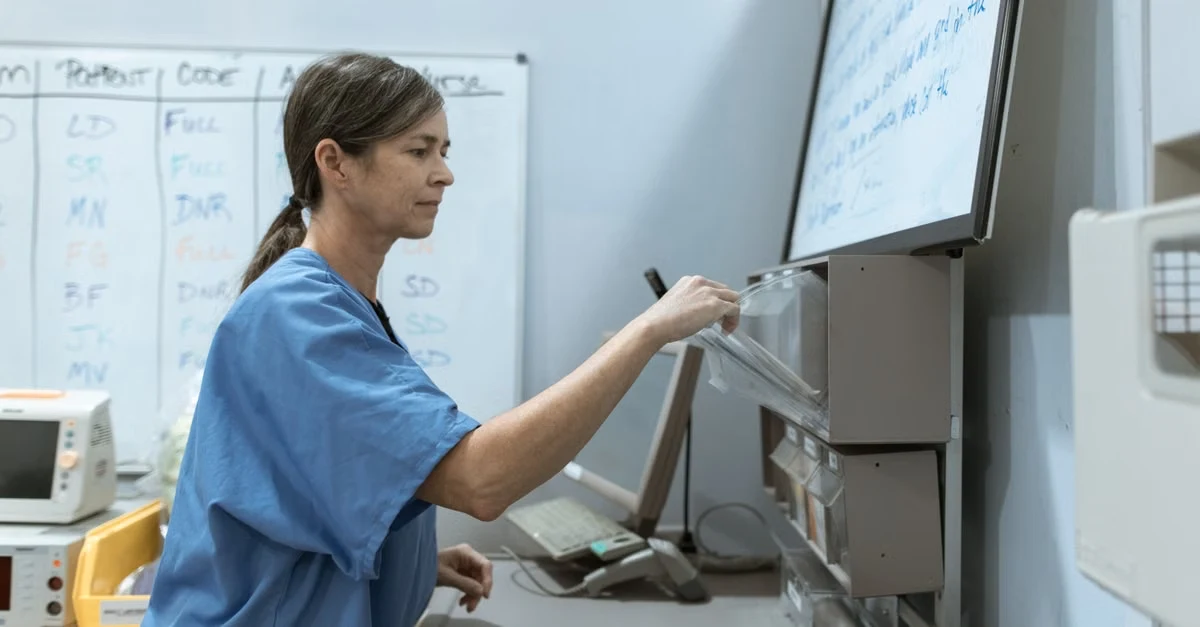
Documentation does not end when the note is signed. What the clinician dictates determines what a coder can code, which determines what a payer will pay. A vague or incomplete note forces downstream teams to interpret intent, and every interpretation creates a chance of denial.
That is why the note matters far beyond the exam room. Dictation is the first record of clinical intent, and it sets the ceiling on accuracy for everything that follows in the mid-revenue cycle. Dictation software that produces a complete, specific note protects revenue integrity, even though revenue isn't on the clinician's mind while they speak.
Frequently Asked Questions
Before you shortlist a tool, here are the questions clinical and operations teams ask most:
Is Medical Dictation Software HIPAA Compliant?
Compliance depends on the vendor, not the category. Any tool that handles protected health information should operate under a signed business associate agreement, encrypt data in transit and at rest, and limit data use to producing your documentation.
Ask for those specifics in writing rather than accepting a general assurance.
How Is Dictation Different From an AI Medical Scribe?
The market term "AI medical scribe" usually describes ambient capture, where the software records the patient-clinician conversation and drafts a note from it.
Dictation is voice-first, meaning the clinician speaks the note directly. Some solutions support both, so a clinician can record a conversational visit and dictate the parts of the record that were never discussed aloud.
Does Medical Dictation Software Work With My EHR?
Most clinical dictation tools integrate with major EHRs, but the depth varies. The question to ask is whether the software writes to discrete fields in your system or drops in a block of text you then have to sort.
Confirm your specific EHR and version during the evaluation.
How Accurate Is Medical Dictation Software?
Accuracy varies by engine, by specialty vocabulary, and by dictation conditions such as microphone quality and background noise.
Treat a vendor's headline number as a starting point, then test the tool on your own notes and accents before you rely on it. Real-world performance in your setting matters more than a figure on a slide.
What Happens to Medical Transcriptionists?
The role shifts rather than disappears. As dictation and AI documentation handle more of the initial capture, transcription and documentation staff move toward review, quality checks, and the exceptions that need human judgment.
Organizations that plan for that shift keep the expertise while changing the work.
Where to Start With Medical Dictation Software
The tools have improved, but the decision has not changed much. You are choosing how your clinicians turn what happened in a room into a record that holds up for the coder, the payer, and the next physician who reads it. Dictation earns trust because the clinician says the words and confirms the note, and the right software respects that instead of working around it.
DeliverHealth builds documentation that fits how clinicians already work. Notes are formatted to each organization's and provider's templates, a near-final structured note returns in about five minutes, and InstaNote runs on eSOne, our HITRUST i1 certified platform, with a business associate agreement signed before we handle any patient data.
Request a demo to see how we fit dictation into your clinicians' existing workflow.
Stay Updated
Subscribe to our newsletter for the latest healthcare AI insights and company updates.