
AI Scribe for Cardiology: What Heart Programs Should Require
An AI scribe for cardiology has to document far more than the office visit, from dictated echo reads to cath lab notes and inpatient consults. This guide shows cardiology leaders what to require, what coders need, and how to run a pilot.
Afternoon clinic has wrapped, and the cardiologist turns to the notes still open. Three echo reads sit in the queue, a stress test needs an interpretation, and the consult from morning rounds is half finished.
One of those notes began as a conversation with a patient. An AI scribe for cardiology has to handle all of them, because the specialty documents far more than the office visit.
In this article, we map the note types a cardiology tool must cover, what your coders need from each one, and how to pilot a tool your clinicians will trust.
TL;DR: Cardiology AI Documentation at a Glance
The short version for a cardiology buying group:
Four settings, one record: Cardiology notes come from the clinic, the reading room, the cath and EP labs, and the hospital floor, so the tool needs ambient capture and dictation.
Reads have no conversation: ECG, echo, and stress test interpretations are dictated, and each one has to stay the reading cardiologist's own signed report.
Specificity drives codes: Heart failure type and acuity, measured values, and vessel detail decide which codes a note can support.
Restraint is a feature: A safe tool leaves a field blank when nothing was said and never presents an old value as a new one.
Pilot on real note types: Score drafts across every note type your program writes, with coders in the review.
Why Cardiology Documentation Outgrows the Exam Room
Cardiology work moves between rooms all day. A cardiologist may see clinic patients, read studies, scrub into the cath lab, and round on inpatients before the evening queue is clear.
That pace takes a toll on your clinicians. In an American College of Cardiology survey on burnout, about 35% of more than 2,000 responding cardiologists reported burnout.
The same survey found that cardiologists who reported burnout were more likely to cite insufficient time for documentation. They also tended to use the electronic health record (EHR) more at home.
Ambient tools are built to listen to a clinician and a patient talking in an exam room. Cardiology fits that model for part of the day, and much of the remaining record is dictated in reading rooms, procedure labs, and hospital units.

Cardiology Note Types an AI Documentation Tool Must Cover
Before you compare vendors, list the note types your program produces in a typical week.
Most cardiology programs will recognize four groups:
1. Clinic Visits With Long Medication Lists
Outpatient visits suit ambient capture, since the history unfolds in conversation. A heart failure or atrial fibrillation follow-up can still cover anticoagulation, rhythm control, dose changes, and recent results in a few minutes of talk.
The risk sits in what a tool brings in from earlier records. An ejection fraction from last year's echo that lands in today's assessment without its date reads as a current finding.
Ask each vendor how carried-forward values are labeled, and whether your clinicians can see the source of each value before they sign.
2. Test Interpretations With No Patient in the Room
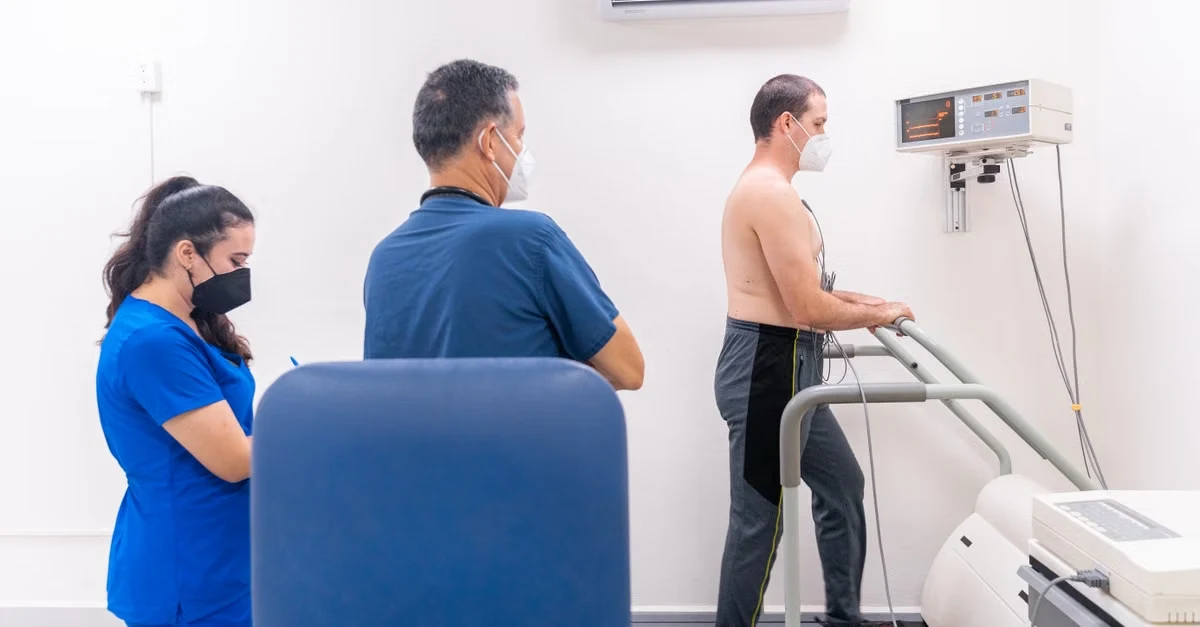
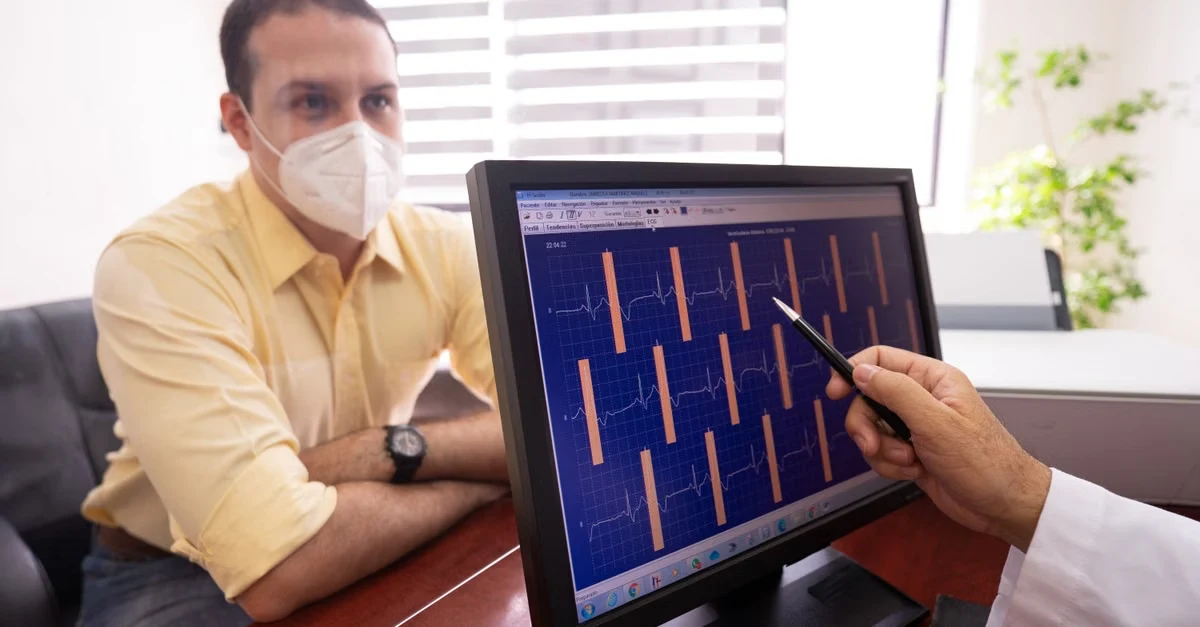
Electrocardiogram (ECG), echocardiogram, stress test, and Holter reads happen at a workstation. Nobody is speaking with the cardiologist, so an ambient-only tool has nothing to capture.
These reports depend on dictation, so evaluate this part of the tool the way you would evaluate medical dictation software, with terminology and measurement accuracy first. The AI should structure the dictated read into your lab's report format without altering a single finding.
Keep each interpretation clearly authored and signed by the reading cardiologist. That authorship supports accurate cardiology CPT coding for the professional read.
3. Cath Lab and Electrophysiology Procedure Notes
Interventional and electrophysiology (EP) notes are usually dictated after the case. They record the access site, the vessels or pathways treated, the devices placed, and the findings before and after the intervention.
Vessel-by-vessel detail shapes which procedure codes and modifiers an encounter supports. A tool that condenses a multivessel case into one tidy paragraph can erase the detail your coders need.
4. Inpatient Consults and Daily Progress Notes
Hospital cardiology produces consult notes, daily progress notes, and transfer summaries, often dictated between bedside visits. These inpatient notes also become the source material your coding and clinical documentation integrity (CDI) teams review.
Ask each vendor to show an inpatient consult during evaluation, alongside the clinic visit.
Covering all four note types means supporting two ways of capturing speech inside one workflow. We built our documentation around that requirement.
At DeliverHealth, we provide AI-powered clinical documentation and coding solutions for independent practices, physician groups, and enterprise-level health systems. InstaNote, our AI clinical documentation, supports ambient and dictation workflows across inpatient and outpatient care, and it includes coding suggestions your providers review and approve before sign-off.
Your cardiologists can switch between ambient capture and dictation within one encounter, and InstaNote returns a near-final, structured note in about three minutes. Note templates follow your organization's and each provider's requests, so reads and consults keep the structure your teams already expect.
Book an InstaNote demo to watch sample cardiology notes take shape from both ambient and dictated input.
What Coders Need From a Cardiology Note
Every code your team submits rests on what the provider documented. The current ICD-10-CM Official Guidelines direct coders to report diagnoses at the highest level of specificity documented in the record.
The same guidelines treat an unspecified code as the right choice when the record lacks detail. They also state that selecting a more specific code when the documentation doesn't support it is inappropriate.
For cardiology, a handful of documentation details carry most of that weight:
Documentation detail | Why your coders need it |
|---|---|
Heart failure type and acuity | ICD-10-CM separates systolic, diastolic, and combined heart failure, each as acute, chronic, or acute on chronic |
Values from the current study | A value carried over from an older study can conflict with today's assessment, and conflicting documentation sends coders back to the provider with a query |
A signed interpretation for each read | Keeps the professional read distinct and attributable to the reading cardiologist |
Vessel, lesion, and device detail | Determines which procedure codes and modifiers the case supports |
An AI tool should never close those gaps by guessing. If a cardiologist did not say "acute on chronic," the draft should not say it either, and the coder should see the gap.
Our VP of Business Operations, Gautam Kumar, puts the downstream cost in plain terms.
"If the note is incomplete, or for whatever reason it is inconsistent, or if there is some, you know, clinical specificity missing, every downstream process becomes reactive."
Risk-adjusted contracts raise the stakes further, since diagnosis detail feeds the risk scores behind HCC medical coding.
When those notes reach coding, InstaCode works from InstaNote drafts, traditional dictation, operative reports, or existing EHR notes, with no change to how your cardiologists document.
Our AAPC- or AHIMA-credentialed coders review complex and flagged encounters, and our built-in audit system records every AI output, human change, and the reasoning behind it.
How to Evaluate AI Documentation for a Cardiology Program
Once your note inventory is clear, the evaluation can follow it.
Ask every vendor to demonstrate these capabilities with cardiology content:
Ambient and dictation in one tool: Your cardiologists should move from a recorded clinic visit to a dictated read without switching applications.
Restraint with clinical values: Test whether a draft invents a normal finding, rounds a measurement, or carries an older value forward without its date.
Report structures your lab uses: Interpretation and procedure notes should follow your organization's templates and each provider's preferences.
Coding signals before sign-off: Coding suggestions should appear while the provider can still clarify the note.
EHR integration depth: Ask whether the tool writes to discrete EHR fields or attaches a document, since discrete data is easier to report and audit.
Clear security scope: Request the business associate agreement (BAA), and confirm which certification covers which system.
Give the second item the most testing time. Cardiology notes are dense with numbers, and a confident wrong number is harder to catch than an empty field.
How to Approach Consent for Recorded Cardiology Visits
Ambient capture records the patient, and often a caregiver or child who joins the visit. Consent practices vary by state and by organization, so your compliance team and legal counsel should set the policy before go-live.
Research supports treating that conversation with care. A JAMA Network Open study on ambient documentation consent followed 18 clinicians and 103 patients and found that patient comfort varied with trust in the clinician, understanding of the tool, and perceived benefits or risks.
The researchers suggested flexible approaches, including education and opt-out options.
For a cardiology clinic, those translate into a few practical steps:
Ask before recording: Train clinicians to request permission at the start of the visit, including from family members in the room.
Offer a dictation path: Let patients decline recording, and have the clinician dictate the note after the visit.
Name the human review: Tell patients the cardiologist checks and signs every note before it enters the record.
How to Pilot an AI Documentation Tool in Cardiology
A pilot measures the tool against your own documentation. Vendor demos run on sample content, so benchmarking against real notes belongs in the pilot.
Plan for the human side as well, because ambient AI adoption depends as much on organizational readiness as on the software.
Run the pilot in four steps:
1. Choose Note Types Before Choosing Clinicians
Include at least one clinic panel, one reader, one interventional or EP physician, and one inpatient rotation. A clinic-only pilot leaves most of the risk untested.
2. Score Drafts Against the Signed Note
Compare each AI draft with the final signed version and log every edit by type. Separate formatting changes from clinical corrections, since the second group tells you about safety.
3. Put Coders in the Review Loop
Ask your coding team to review a sample of piloted encounters for specificity, query volume, and missing detail. Their findings show whether faster notes are also codeable notes.
4. Agree on a Go or No-Go Standard
Set thresholds for clinical corrections and clinician satisfaction before the pilot starts. A bar set in advance keeps the final decision grounded in evidence.
Frequently Asked Questions (FAQs)
These questions come up most often when cardiology leaders evaluate AI documentation:
Can AI Documentation Handle Echo and ECG Interpretations?
Yes, when the tool supports dictation, since interpretations are spoken after the study with no patient conversation.
The cardiologist dictates the findings, the tool structures them into your report format, and the cardiologist signs the result.
Should an AI Tool Pull Results From Prior Studies Into a New Note?
Pulled-forward data can save time when each value carries its source and date.
Ask vendors how they label carried-over values and how clinicians confirm them before signing.
Does AI Documentation Work for Inpatient Cardiology?
Inpatient consults and progress notes are often dictated between bedside visits, so dictation support matters as much as ambient capture.
Confirm that each vendor can show inpatient workflows in use during evaluation.
Will AI Documentation Replace Cardiology Coders?
AI can handle volume and repetitive work, while credentialed coders handle exceptions, queries, and judgment calls.
Cardiology's specificity rules make that human review essential for complex encounters.
How Long Does Implementation Usually Take?
Timelines vary by vendor, EHR, and specialty mix.
Our InstaNote deployments typically take two to three weeks, with about one week to a provider's first chart-ready note.
Final Thoughts on Choosing AI Documentation for Cardiology
Cardiology documentation is several workflows sharing one record. The tool you choose should treat the clinic conversation, the dictated read, the procedure note, and the hospital consult with the same care.
Measure each option against the notes your program actually writes, and let your coders weigh in before anyone signs a contract. Our approach starts from that same premise.
At DeliverHealth, we build AI-powered documentation and coding solutions on the principle that the clinical note starts the revenue cycle. We serve independent cardiology groups and enterprise-level health systems with InstaNote for documentation and InstaCode for coding, with credentialed human review.
More than 40,000 healthcare providers trust InstaNote, and each provider approves its coding suggestions before sign-off. InstaNote runs on our eSOne platform, which is HITRUST i1 certified, and InstaNote's speech recognition is designed not to add anything that wasn't said.
Schedule an InstaNote demo to review sample cardiology notes with our team and plan a pilot around your program's note types.
Stay Updated
Subscribe to our newsletter for the latest healthcare AI insights and company updates.