

How Ambient Clinical Documentation Works
Ambient clinical documentation can give clinicians back the exam room, but only when the note stays accurate and the clinician stays in control. Here is how the technology works, where dictation still carries the load, and how the note connects to coding downstream.
Every clinician knows the scene. The patient is still talking, and the doctor is already typing, eyes on the screen instead of the person across the room. Ambient clinical documentation is meant to change that, drafting the note in the background so the clinician can look up and give the patient their full attention.
When used well, it eases the documentation load without lowering record quality.
In this article, you'll learn what it is, how it works, where dictation still carries the load, the trust it demands, and how the note connects to coding downstream.
TL;DR: Ambient Clinical Documentation in Brief
The short version, before the detail:
Ambient clinical documentation captures a patient visit and drafts the clinical note in the background, so the clinician reviews and signs it rather than types it.
It works best in conversation-heavy outpatient care. Dictation still carries encounters with no conversation to capture, such as operative and procedural notes.
The clinician stays accountable. The system should not invent content, and every note is reviewed and signed before it reaches the chart.
Patient trust matters as much as the technology. Consent practices vary by organization and by state.
The note does not end at sign-off. It feeds coding, denials, and revenue integrity downstream.
How Ambient Clinical Documentation Works
Ambient clinical documentation uses AI to listen to a patient encounter and draft a structured clinical note from the conversation. The clinician talks with the patient as usual. The software works in the background and produces a draft to review.
The market uses several names for overlapping ideas, which makes procurement conversations harder than they need to be. Ambient clinical intelligence is the broader category that adds orders, summaries, and coding support around the note. An ambient AI scribe is the same capture-the-conversation idea sold to individual clinicians. None of these is the same as speech recognition, which turns speech into text but does not draft the note.
Under the surface, most systems move through three stages.
Capture the Encounter
Capture starts with audio. In a clinic visit, a microphone on a phone or workstation picks up the natural conversation between clinician and patient.
In encounters with little or no conversation, the clinician dictates the note instead. Both inputs feed the same drafting step, and the better systems let a clinician switch between them within a single encounter.
Turn Speech Into a Draft Note
Speech recognition converts the audio to text. Language models then organize that text into the sections of a clinical note, formatted to the templates the organization and the provider have set.
The safeguard that matters here is restraint: strong speech recognition is designed not to add anything that wasn't said, so the draft reflects the encounter rather than a plausible version of it.
Review and Sign in the EHR
The draft returns to the clinician, who reads it, corrects anything that is off, and signs. Any coding suggestions the system surfaces are reviewed and approved in the same pass.
Once signed, the note writes back to the electronic health record (EHR), ideally into discrete fields rather than as a document stapled to the chart.
Match the Capture Mode to the Care Setting
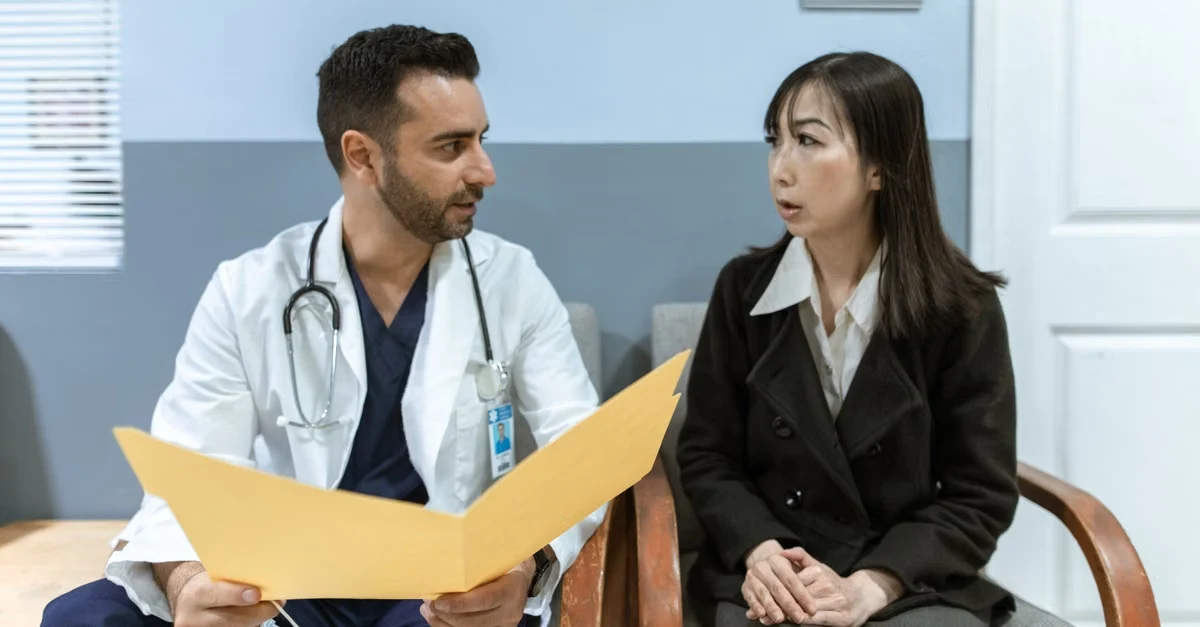
Ambient capture assumes there is a conversation to capture. A primary care or behavioral health visit is mostly dialogue, and that is where ambient documentation shines. Naming the care setting matters because the assumption breaks in large parts of medicine.
Consider the encounters that generate little spoken dialogue with the patient: operative reports dictated after a case, procedural and diagnostic reads in radiology, and much of inpatient documentation. There is no exam-room conversation to listen to. Dictation carries these notes, which is why a documentation approach that supports both ambient and dictation covers more of a health system than an ambient-only tool.
For a closer look at surgical and inpatient work, see how DeliverHealth handles documentation for complex encounters.
The practical takeaway: map your specialty mix before you choose. Outpatient conversation, inpatient dictation, and procedural notes each place different demands on the same technology.
Ease the Documentation Burden Without Losing Quality
Documentation is a leading driver of clinician burnout, and the load is heavy. A study in the Annals of Family Medicine found primary care physicians spend about 5.9 hours of an 11.4-hour workday in the EHR. Another study in the Annals of Internal Medicine found physicians spend nearly two hours on EHR and desk work for every hour of direct clinical face time.
Ambient documentation targets that ratio. When the note is drafted during the visit, the day changes in a few concrete ways:
Less charting after hours, so work stops at the end of the day.
More attention on the patient instead of the keyboard during the visit.
A more complete draft, built from the whole conversation rather than typed from memory at the end of a long day.
Those gains depend on the review step. A faster note that no one checks carefully is not a better note, which is why the clinician still reads, corrects, and signs every draft.
As Garrett Dunne, Director of Product Implementation at DeliverHealth, put it, the goal is that "it has to be something where the doctor's not looking at a screen. They're looking at the patient."
We built InstaNote to close that gap. At DeliverHealth, we provide AI-powered clinical documentation and coding solutions for health systems and physician groups.
InstaNote captures both ambient conversations and dictation across inpatient and outpatient care, with coding suggestions the provider approves before sign-off. Our speech recognition is designed not to add anything that wasn't said, and each note is structured to the templates your organization and providers already use.
Request a demo to see how InstaNote fits your clinicians' workflow.
Protect Patient Trust When the Recording is On
Recording a visit changes the visit. A study in JAMA Network Open on informed consent for ambient documentation, which surveyed 103 patients at an academic health system, found that patient comfort depended heavily on trust in the clinician and on how well the tool was explained.
In interviews, patients described being more guarded about sensitive subjects, such as mental health, sexual health, and substance use, when they knew a visit was being recorded. What the technology captures is only part of the picture. What the patient decides to say is the other part, and that sits with the clinician in the room.
Consent is where organizations carry real responsibility. HIPAA governs how protected health information is handled, and a vendor should sign a business associate agreement before touching any patient data; the HHS Office for Civil Rights is the authority on both. Beyond that baseline, consent practices for ambient recording vary by organization and by state, so treat a blanket "patients always consent" claim with caution and check your own policy.
For a fuller treatment of this tension, we have written more about patients and ambient recording. The short version: this is a trust question first and a technology question second.
Keep the Note Accurate and the Clinician in Control
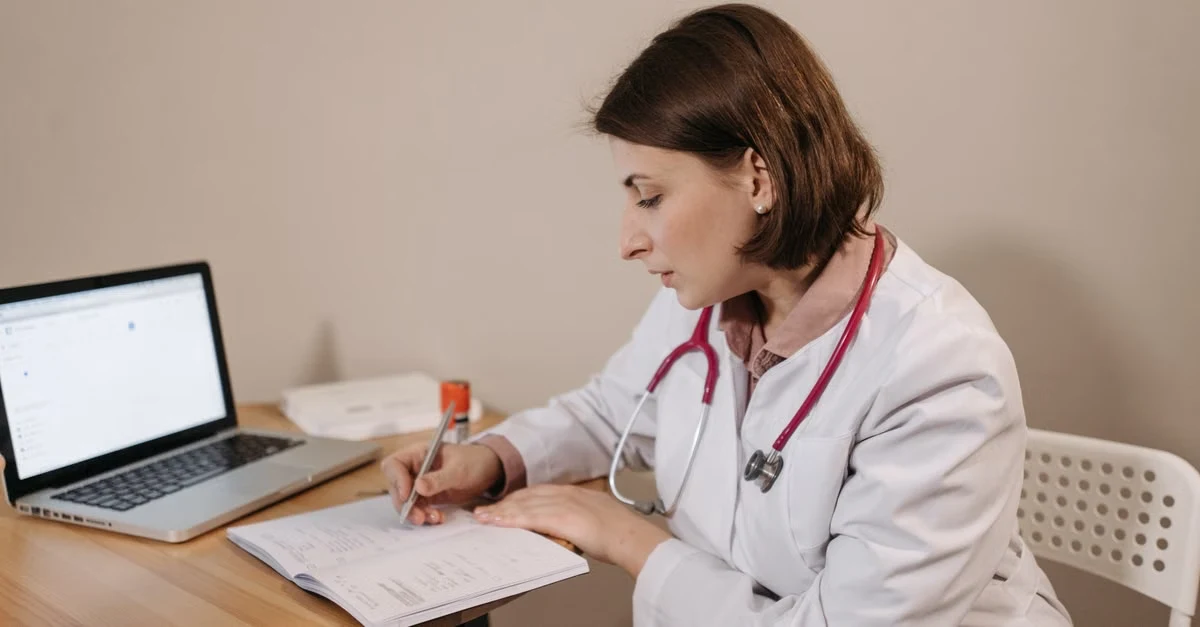
The risk that keeps clinical leaders up at night is invention: an AI that fills a gap with something that sounds right but was never said. The defense is design. A system built for the clinic should not infer a diagnosis the clinician did not state. When something is not documented, the corresponding section stays blank on purpose. A blank the clinician can fill in is safer than a confident guess, and it protects both the clinician and the patient.
Human review is the other half of that design, not a temporary crutch.
Percy Bhathena, our VP of Product and AI, frames the whole approach simply: "We look at it from a lens of always augment versus replace."
The clinician reads every note and signs it. The software surfaces and structures; the clinician decides. Accountability stays with the person who can be held to it.
Follow the Note From Encounter to Code
The clinical note is where the revenue cycle starts. Everything downstream, including coding, claims, and payment, is an interpretation of what the note does or does not contain. When documentation is complete and specific, coding is cleaner and fewer claims come back denied. When it is thin, every later step inherits the gap. For the strategic version of this argument, see documentation and the revenue cycle.
DeliverHealth extends that same documentation into coding. Its InstaCode solution turns clinical notes into accurate, defensible codes, with credentialed AAPC or AHIMA coders reviewing the complex and flagged encounters. An audit trail records every AI output and human change with the reasoning behind it, and codes are ready before encounters leave the system.
See how the same note becomes accurate, defensible codes. Explore InstaCode.
Treat Adoption as an Organizational Change
The technology is rarely the hard part. Adoption is mostly an organizational problem: workflow fit, training, provider champions, and integration into the EHR your clinicians already use. A tool that a few enthusiasts love but most clinicians ignore has not solved anything.
Plan for the range of clinicians you actually have. Some will adopt eagerly, some will be reasonably skeptical, and some will resist for reasons worth hearing out.
Meeting each group where they are, with formats that match their preferences and integration that writes into the right EHR fields, decides whether a rollout sticks. For more on this, see why adoption is organizational.
Frequently Asked Questions
A few questions come up in almost every evaluation:
Is Ambient Clinical Documentation the Same as Speech Recognition?
No. Speech recognition converts spoken words into text. Ambient clinical documentation goes further, organizing that text into a structured clinical note formatted to your templates, then returning it for review and sign-off.
Speech recognition is one component inside the larger process.
Do Patients Have to Consent to Ambient Clinical Documentation?
Consent practices vary by organization and by state, so there is no single national rule. Most organizations build a consent conversation into the visit and offer patients a way to opt out.
How you handle consent is your organization's and your clinicians' responsibility, and it is worth documenting your policy clearly.
Who Is Accountable if an AI Note Contains an Error?
The clinician who signs the note. Ambient documentation drafts, but the signing clinician reviews, corrects, and takes responsibility for the record.
A sound system supports that review with clear pathways to edit and, where relevant, confidence signals on suggested content.
Will Ambient Clinical Documentation Replace Scribes or Coders?
It changes the work more than it removes people. Clinicians move away from typing, and coding staff shift from repetitive volume toward exceptions, denial prevention, and compliance.
The judgment calls still need experienced people, which is why credentialed human review stays part of the design.
How Long Does an Ambient Documentation Rollout Take?
It depends on your specialty mix, your EHR, and how integration is scoped.
Discovery often begins before the contract, and many deployments run in a few weeks rather than months, though the timeline shifts with the details of each health system.
Put Ambient Clinical Documentation to Work
Ambient clinical documentation is most useful when it is treated as one link in a chain rather than a gadget for the exam room. The visit produces a note, the note becomes a code, and the code becomes a paid, defensible claim. Get the note right, with the clinician in control and the patient's trust intact, and every step after it gets easier.
At DeliverHealth, our solutions span that chain, from documentation to coding. InstaCode, our AI-powered coding solution, turns clinical notes into accurate, defensible codes, with credentialed AAPC or AHIMA coders reviewing the complex and flagged encounters. An audit trail records every AI output and human change with the reasoning behind it, and codes are ready before encounters leave the system.
See how the same note becomes accurate, defensible codes. Explore InstaCode.
Stay Updated
Subscribe to our newsletter for the latest healthcare AI insights and company updates.